
Print Materials and Promo Products That Boost Sales
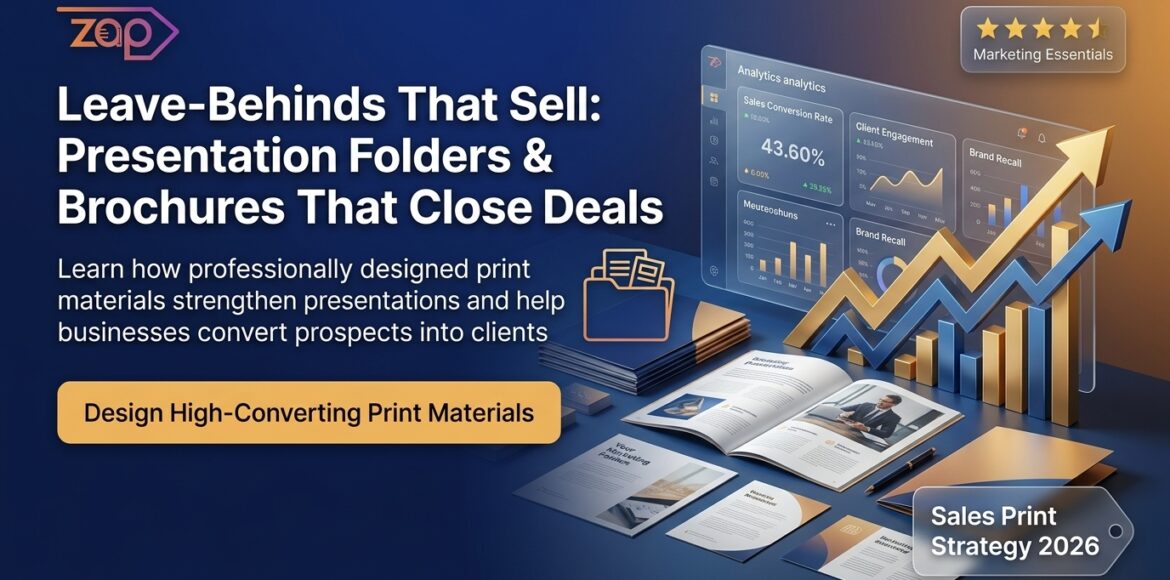
In today’s competitive business environment, first impressions matter more than ever. While digital presentations and emails are essential tangible print materials and promo products commonly known as leave-behinds—remain one of the most effective ways to make a lasting impression on clients. A well-designed presentation folder or brochure doesn’t just convey information; it reinforces your brand builds trust and nudges prospects closer to a decision.
What Are Leave-Behinds and Why They Matter
Leave-behinds are materials you leave with clients after a meeting. They can include presentation folders brochures & branded promo products like pens or notepads. Unlike digital content that leave-behinds provide a tactile experience that helps your business stand out. They are particularly effective for:
- Reinforcing your brand identity
- Providing clients with tangible reference materials
- Enhancing recall and engagement after meetings
When done right, leave-behinds can turn a simple meeting into a memorable client experience that accelerates decision-making.
Print Materials: Presentation Folders & Brochures
Why Print Materials Matter
Professional presentation folders and brochures act as a physical extension of your brand. So they communicate attention to detail professionalism & credibility. A high quality folder or brochure ensures that clients take your materials as seriously and perceive your business as trustworthy and reliable.
Key Elements of Effective Print Materials
Design & Branding
Your folders and brochures should be consistent with your brand identity. Use company colors fonts and logos in a clean & professional layout. Avoid the clutter simplicity often speaks louder than flashy designs.
Paper Quality & Finish
The tactile experience is crucial. When it consider matte glossy or laminated finishes that feel premium. Heavier paper stock conveys quality and durability signaling to clients that your brand values excellence.
Organization & Layout
Pockets inserts & easy to read sections make materials more functional. Presentation folders should neatly hold brochures contracts & additional documents keeping everything organized for the client.
Copy & Visuals
Use concise persuasive copy that focuses on client benefits. Visual hierarchy is clear in headings subheadings and images guides readers through your message. Always include a call-to-action to encourage the next step whether it’s a follow-up of call or a product demo.
Promotional Products: Enhancing Leave-Behinds
Types of Promo Products
Branded promotional items complement your folders and brochures, making your leave-behind kit memorable. Common examples include:
- Pens and notebooks
- USB drives with resources or presentations
Tote bags or reusable items - Desk accessories like mousepads or calendars
Selecting the Right Items for Your Audience
Not every promo product is suitable for every client. Consider the client’s industry role & usage likelihood. Items that are practical and high quality are more likely to be used and appreciated a reinforcing your brand over time.
Integrating Promo Products into Your Sales Strategy
Pairing promo items with your print materials creates a complete package that elevates the client experience. For example a professional folder for containing your brochure a branded pen & a USB drive with additional resources can make a lasting impression that digital files alone cannot achieve.
Design & Printing Tips for Maximum Impact
Investing in professional design and printing is non-negotiable. Consider these tips:
- Choose a reliable printer: High-quality print output ensures colors, images, and fonts remain sharp.
- Color accuracy: Use RGB for screens and CMYK for print to maintain consistency.
- Finishing touches: Embossing, foil stamping, UV coating, and other enhancements add a premium feel.
- Proof carefully: Always review layouts and text before printing large batches.
A professional look demonstrates credibility and increases the perceived value of your offerings.
Common Mistakes to Avoid in Print & Promo Leave-Behinds
- Overcrowded or cluttered designs
- Low-resolution images or inconsistent branding
- Promo products that are irrelevant or low-quality
- Ignoring client-specific needs or preferences
By avoiding these mistakes, your leave-behinds will feel intentional, professional, and client-focused.
Measuring Success & ROI
Track engagement with leave-behinds to understand their impact. For instance:
- Are clients following up after receiving materials?
- Do promo items get used, and does this spark conversations?
- Are folders and brochures reflecting positively on brand perception?
Adjust your strategy based on feedback and analytics to maximize ROI on print materials and promotional products.
Conclusion
Combining high-quality print materials and thoughtful promotional products and creates the leave-behinds that truly sell. Presentation folders and brochures paired with relevant promo items leave a lasting impression and help close deals faster. Investing in professional design & production from experts like Zap Signs & Services ensures your leave-behinds reflect to your brand’s quality and attention to detail giving you a competitive edge in every client interaction.
Suggested Visuals
- Professional presentation folder and brochure mockups
- Promo product examples paired with print materials
- Infographic showing engagement impact of leave-behinds
- Before-and-after comparisons of DIY vs. professional designs
FAQs
What are leave-behinds and why are they important?
Leave-behinds are printed marketing materials such as brochures, presentation folders, or product sheets that you leave with potential clients after a meeting or presentation. They reinforce your message, provide key information about your services, and keep your brand visible even after the meeting ends.
How can presentation folders enhance client meetings?
Presentation folders help organize documents, brochures, proposals, and business cards in a professional way. They create a polished impression during meetings and make it easier for clients to review your information later.
What type of paper works best for brochures?
High-quality coated paper such as gloss or matte stock (150–250 GSM) is commonly used for brochures. Gloss paper enhances colors and images, while matte paper offers a more elegant and readable finish.
Should I design folders in-house or hire a professional?
If you have experienced designers and proper design tools, in-house design can work well. However, hiring a professional designer often ensures better layout, branding consistency, and print-ready files that produce higher-quality results.
How do I make my brochures more persuasive?
Use clear headlines, concise content, strong visuals, and a clear call-to-action. Focus on the benefits of your product or service rather than just listing features, and ensure the design guides readers through the key points effectively.
How often should I update my leave-behinds?
Leave-behinds should be updated whenever your branding, services, pricing, or contact information changes. Many businesses refresh them every 6–12 months to keep the content current and aligned with marketing campaigns.
What are common design mistakes to avoid?
Common mistakes include overcrowded layouts, too many fonts, poor image quality, inconsistent branding, and lack of clear messaging. Keeping the design clean, readable, and visually balanced is essential.
Can promo products increase client retention?
Yes. Promotional products such as branded pens, notebooks, or merchandise keep your brand visible in daily use. This consistent exposure helps strengthen brand recall and improves long-term client relationships.
How do I combine print materials and promo products effectively?
You can include brochures, flyers, and branded merchandise together in a presentation folder or welcome kit. This approach delivers both informative content and a tangible reminder of your brand.
Which finishing options make a brochure or folder stand out?
Finishing options like spot UV coating, embossing, foil stamping, die-cutting, and soft-touch lamination add a premium look and feel. These enhancements help your materials stand out and create a more memorable impression.